| ⛽ Key Facts: US Gas Prices — May 2026 | |
|---|---|
| Topic | Surging US gas prices and strategies to save money on fuel in 2026 |
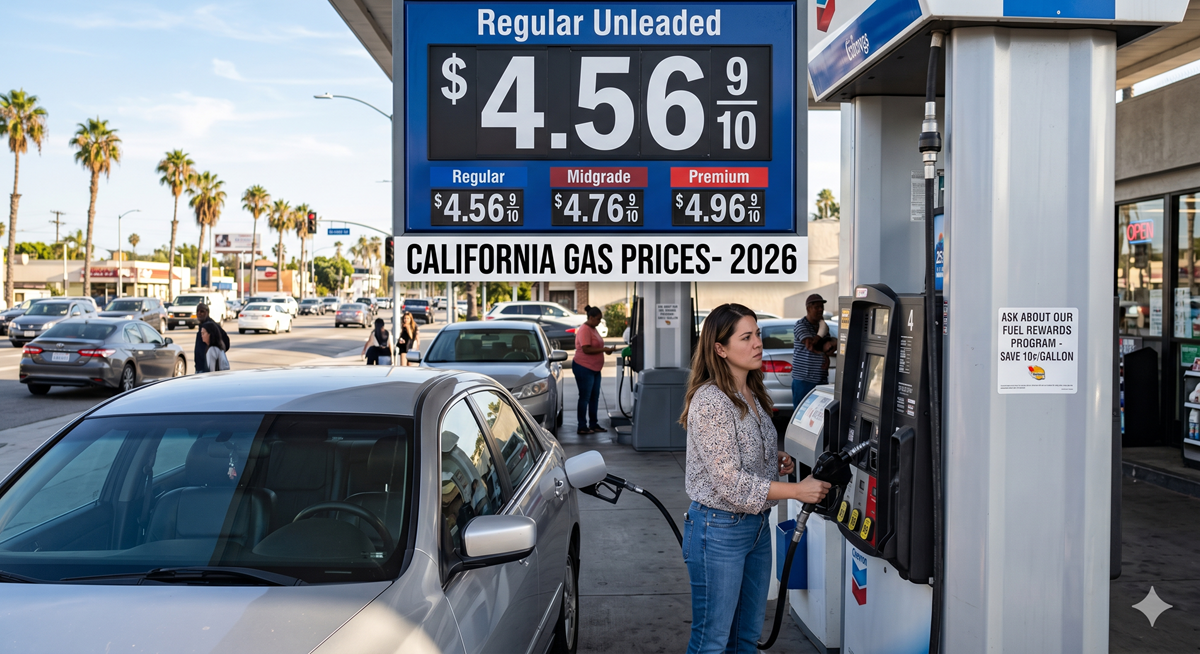
| Key Figures | National average $4.56/gal (May 2026); California $6.15/gal; Oklahoma $3.94/gal |
| Who It Affects | All US drivers — commuters, families, small businesses, truckers |
| Time Period | Spring–Summer 2026; prices rose sharply since February 2026 |
| Bottom Line | Smart habits and the right apps can save drivers hundreds of dollars per year even at peak prices. |
Why Gas Prices Are Hurting Your Wallet Right Now
If you are looking for ways to save money on gas in 2026, you are far from alone. The national average price for a gallon of regular gasoline surpassed $4.56 in late May 2026 — the highest level since 2022 — and drivers across the country are feeling the squeeze every time they pull up to the pump. Prices have surged by more than 40% compared to a year ago, driven largely by the ongoing military conflict in the Middle East and disruptions to oil flow through the Strait of Hormuz. Whether you commute daily, run a small business, or simply need your car to get through the week, these elevated fuel costs are putting real pressure on household budgets. The good news: there are practical, proven strategies that can meaningfully reduce how much you spend at the pump — and this guide lays out the most effective ones for 2026.
What Is Driving Gas Prices So High in 2026?
At the start of 2026, analysts were actually forecasting cheaper fuel. GasBuddy projected a national yearly average close to $2.97 per gallon — what would have been the first sub-$3 average since the pandemic. That forecast fell apart quickly. By March, Middle East tensions had spiked crude oil prices, and the national average climbed to $3.48 per gallon. April saw the first $4-per-gallon average since August 2022. By mid-May, the national average crossed $4.50, a 43.6% jump from one year earlier, according to AAA data. Patrick De Haan, head of petroleum analysis at GasBuddy, called it “the most volatile summer at the pump in years,” pointing directly to the Strait of Hormuz closure as the root cause. States like California ($6.15/gal), Washington ($5.77/gal), and Hawaii ($5.64/gal) bear the highest costs, while Gulf states such as Oklahoma ($3.94/gal) and Mississippi ($3.98/gal) remain comparatively affordable. Several states are now exploring gas tax suspensions to ease the burden on consumers, and federal discussions are ongoing.
10 Proven Ways to Save Money on Gas in 2026
1. Use Price-Tracking Apps to Shop Smarter
Apps like GasBuddy, GasGuru, and Waze offer real-time fuel price comparisons in your area. Even within the same neighborhood, prices can vary by 10 to 20 cents per gallon — a difference that adds up fast if you fill up weekly. Warehouse clubs like Costco and Sam’s Club regularly offer some of the lowest prices in any market, so a membership can pay for itself in fuel savings alone. Cross-referencing two or three apps gives you the most reliable picture before you commit to a station.
2. Keep Your Tires Properly Inflated
Underinflated tires create more rolling resistance, forcing your engine to burn extra fuel with every mile. The Department of Energy estimates that correct tire pressure can improve gas mileage by up to 3.3%. That may sound modest, but at today’s prices it translates to roughly 15 cents per gallon in savings — real money over a full year of driving. Check tire pressure monthly and after significant temperature swings, which affect inflation levels.
3. Slow Down on the Highway
Your fuel economy drops noticeably once you exceed 50 mph. The Department of Energy notes that for every 5 mph you drive over 50, you are effectively paying about 25 cents more per gallon. On a long road trip or highway commute, keeping your speed at 60–65 mph instead of 75–80 mph can produce meaningful savings — and smoother, less aggressive driving (no hard braking, steady acceleration) amplifies those gains further.
4. Eliminate Unnecessary Idling
Sitting with the engine running — at a school pickup line, drive-through, or parking lot — burns fuel for zero miles of movement. Depending on your engine size and AC use, idling can consume up to half a gallon per hour. Turn the engine off whenever you expect to wait more than 60 seconds. Modern engines are designed for frequent restarts, so you will not cause wear by cutting the engine during brief stops.
5. Lighten Your Load
Many drivers carry unnecessary weight — sports equipment, tools, cases of water, bags of stuff that “might be useful” — in their trunks without thinking about the fuel penalty. For every extra 100 pounds in the vehicle, fuel economy decreases by roughly 1–2%. Clear out your trunk and cargo area regularly. If you use a rooftop carrier, remove it when not needed, as it also creates aerodynamic drag that hurts efficiency.
6. Maintain Your Vehicle Regularly
A car that is running below peak condition burns more fuel to do the same work. Routine oil changes, clean air filters, and fresh spark plugs all contribute to better fuel economy. A neglected vehicle can consume significantly more gas than one that receives regular maintenance. Treat scheduled service as a fuel-saving investment, not just a mechanical requirement.
7. Earn Rewards and Use Loyalty Programs
Major fuel retailers offer loyalty programs that reward repeat customers with per-gallon discounts. Shell’s program has offered up to 30 cents off per gallon in promotional periods, while BP guarantees at least 5 cents back on every fill. Grocery store chains frequently tie fuel rewards to your food spending — meaning your weekly shopping trips can knock meaningful cents off your next tank. Stack a rewards credit card (some offer 2–5% cash back on gas) on top of a loyalty program for maximum benefit.
8. Fill Up on the Right Day
GasBuddy’s historical data suggests that gas prices tend to be lowest on Mondays and highest heading into the weekend, as demand peaks for Friday road trips. Filling up on a Monday or Tuesday morning — when stations haven’t yet adjusted to weekend demand — can shave a few cents per gallon compared to a Saturday afternoon fill-up. It is a small optimization, but consistent timing adds up over hundreds of fill-ups a year.
9. Combine Trips and Plan Your Routes
Cold engines burn more fuel than warm ones. If you run five separate short errands on five different occasions, you are starting from cold five times. Batching those errands into one efficient loop — using GPS to find the shortest path between stops — means fewer cold starts and far fewer total miles driven. This simple habit can reduce fuel consumption meaningfully over the course of a month.
10. Skip Premium Unless Your Car Requires It
Consumer Reports is emphatic on this point: unless your vehicle’s owner manual specifically says premium fuel is required, using regular-grade gas is perfectly fine and significantly cheaper. Premium gasoline typically costs 50–70 cents more per gallon than regular. For the vast majority of cars, it provides zero performance benefit — it is simply money left at the pump. Check your manual, and if it says “recommended” rather than “required,” regular is your friend.
✅ Key Takeaways
- US gas prices surged past $4.50/gallon in May 2026, driven by Middle East conflict and Strait of Hormuz disruptions — a 43.6% jump year over year.
- Price-tracking apps like GasBuddy can find stations 10–20 cents per gallon cheaper than the one you usually stop at.
- Proper tire inflation, slower highway speeds, and regular maintenance are among the easiest ways to improve fuel economy without spending a dollar.
- Loyalty programs, rewards credit cards, and grocery fuel points can stack together to cut your per-gallon cost by 30 cents or more.
- Simple habit changes — combining errands, avoiding idling, removing excess weight — can save hundreds of dollars annually at today’s prices.
What This Means for Your Budget — Short and Long Term
At $4.56 per gallon, the average American household is spending considerably more on fuel in 2026 than the $2,083 annual figure GasBuddy projected at the start of the year. If prices hold at current levels, actual annual fuel spending for many families could climb 40–50% above that estimate. Low-income households, rural residents who commute long distances, and small business owners who rely on fleets are hit hardest, with little flexibility to absorb the extra cost.
Looking ahead, GasBuddy analysts warn that even after the Strait of Hormuz situation resolves, it could take a year or more for prices to fully normalize. Several states are pursuing temporary gas tax relief to ease the near-term burden. For individual drivers, the strategies above offer real, actionable savings right now — and building these habits means you will spend less at the pump regardless of where prices eventually land.
People Are Also Asking
Bottom Line: Take Control of Your Fuel Costs Today
Gas prices in 2026 are painful, but they do not have to drain your budget unchecked. From downloading a free price-tracking app to simply checking your tire pressure once a month, the strategies in this guide require minimal effort and deliver real savings. The drivers who will come out ahead are those who treat fuel efficiency as a habit rather than an occasional concern. Start with two or three changes this week — find the cheapest station nearby, clear out your trunk, slow down on the highway — and build from there. Every cent per gallon you save multiplies across hundreds of fill-ups a year.
Found this guide helpful? Share it with a friend who is tired of watching the pump tick past $80 — and drop a comment below with your own favorite fuel-saving tip.
This article is for informational purposes only. Gas price data referenced is sourced from AAA, GasBuddy, LendingTree, and SmartAsset reports published in April–May 2026. Prices fluctuate daily — always check a current source before making decisions. Fuel economy figures cited are based on US Department of Energy guidance.
Related Internal Links
- Peak Biome Reviews 2026: Does Peak BioBoost Work?
- Medicinal Garden Kit Reviews 2026: My Honest Take After Growing All 10 Plants
- Blood Sugar Blaster Reviews 2026: My Honest 3-Month Experience — Did It Actually Help?
- Veluflex Reviews 2026 | Scam or Legit? Hidden Truth Exposed