
The Interim Federal Health Program (IFHP) is the primary federal health coverage for refugees in Canada, providing temporary, limited protection until provincial or territorial insurance eligibility begins. Understanding how refugee health coverage in Canada works is not optional for newcomers. It determines which services cost nothing, which now carry fees, and when a transition to a provincial plan becomes necessary. As of May 2026, IRCC introduced co-payments for supplemental services under IFHP, changing the financial picture for thousands of beneficiaries. This article breaks down coverage categories, 2026 updates, eligibility rules, and the practical steps refugees need to take right now.
How refugee health coverage in Canada works under IFHP
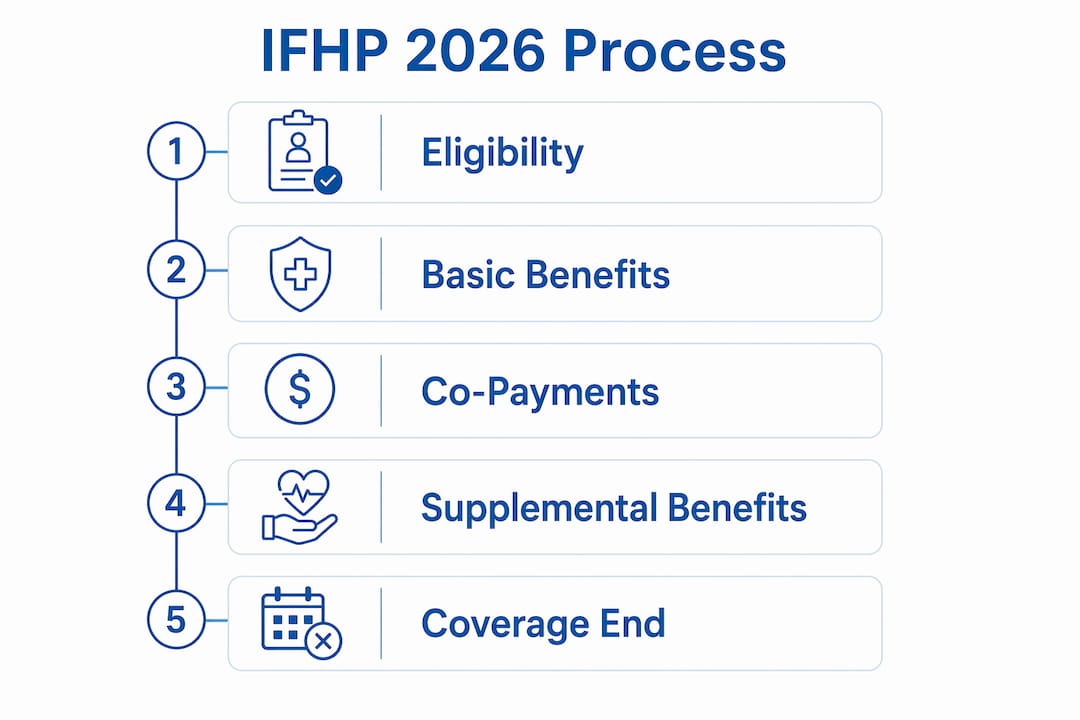
The IFHP is a federal program administered through Medavie Blue Cross on behalf of Immigration, Refugees and Citizenship Canada (IRCC). It covers refugees, asylum seekers, and certain protected persons who do not yet qualify for provincial or territorial health insurance. Coverage is divided into two main categories: basic health benefits and supplemental health benefits. Each category carries different cost rules, and knowing the difference directly affects out-of-pocket spending.
Basic health benefits include doctor visits, hospital care, emergency services, and diagnostic tests. These services remain fully covered with no co-pay under the 2026 updates. Supplemental benefits cover dental care, vision care, mental health counseling, prescription medications, and assistive devices. These now carry co-payments that apply at the point of service.

IFHP also covers immigration medical examinations required as part of the refugee process, and some pre-arrival health services for resettled refugees. Coverage only applies when services are delivered by IFHP-registered providers. A provider search tool is available through Medavie Blue Cross to help beneficiaries locate eligible clinics and professionals.
What services fall under basic vs. supplemental benefits
- Basic benefits (no co-pay): physician visits, hospital stays, emergency care, laboratory tests, diagnostic imaging, and maternity care
- Supplemental benefits (co-payments apply from May 2026): prescription drugs, dental exams and procedures, vision exams and eyeglasses, mental health counseling, physiotherapy, and assistive devices such as hearing aids or orthotics
- Pre-departure and immigration services: medical exams required for immigration purposes and certain health services arranged before a resettled refugee arrives in Canada
The distinction between basic and supplemental benefits matters because clinicians and advocacy groups have raised concerns that this administrative split does not always reflect refugees’ actual healthcare needs. Dental pain or untreated mental health conditions are not minor issues, yet they now carry a financial cost that did not exist before 2026.
What changed with IFHP co-payments in 2026?
Starting May 1, 2026, IFHP introduced two types of co-payments for supplemental services. These changes were driven by program sustainability concerns as annual IFHP costs reached approximately $822 million in 2024-25. That figure reflects both rising demand and extended coverage periods caused by refugee claim processing backlogs.
The two co-payment structures are:
- Prescription medications: A flat fee of $4 per prescription filled or refilled. This applies regardless of the medication’s total cost, making it a predictable but recurring expense for anyone managing a chronic condition.
- Supplemental health products and services: A 30% co-payment on the total cost of dental, vision, counseling, assistive devices, and similar services. For a $200 dental procedure, that means $60 out of pocket at the time of service.
IRCC states that these changes aim to balance accessibility with managing growing demand and program sustainability. The World Health Organization recommends that refugees access quality health services without financial hardship, which means the 30% co-payment on supplemental services creates a real tension between program policy and international health equity standards.
For refugees managing ongoing health needs such as regular prescriptions, orthodontic care, or weekly counseling sessions, these costs accumulate quickly. A person filling four prescriptions per month pays $192 per year in prescription co-pays alone, before any supplemental service fees.
Pro Tip: Confirm the exact co-payment amount with your provider before any supplemental service or prescription is processed. Fees apply at the point of service, and unexpected costs are harder to dispute after the fact.
Who qualifies for IFHP and how does eligibility work?
IFHP eligibility is not automatic for all newcomers. It applies to specific groups based on immigration status, and coverage duration varies significantly depending on where a person is in the refugee process.
Eligible groups include:
- Asylum seekers (refugee claimants): Individuals who have filed a refugee claim in Canada and are awaiting a decision from the Immigration and Refugee Board (IRB)
- Resettled refugees: Government-Assisted Refugees (GARs) and Blended Visa Office-Referred Refugees (BVORs) arriving through official resettlement programs
- Protected persons: Individuals whose refugee claims have been accepted and who are awaiting permanent residence
- Failed refugee claimants with appeal rights: Individuals whose initial claims were denied but who have active appeals or judicial reviews pending. Nearly 74,000 failed claimants remain eligible through this pathway, which is a significant driver of program costs
IFHP operates as the payer of last resort. Once a refugee qualifies for provincial or territorial health insurance, IFHP coverage ends for most services. Provincial waiting periods vary. Ontario and British Columbia have eliminated their three-month waiting periods for new residents, but other provinces still impose delays. During that gap, IFHP fills the coverage role.
Coverage duration can stretch for years depending on claim status, appeals, and processing backlogs. A refugee claimant whose case takes two years to resolve through the IRB and a subsequent appeal may remain on IFHP for that entire period. This extended coverage window is both a protection for the individual and a cost pressure on the federal program.
To enroll or confirm coverage, refugees should contact IRCC or their resettlement agency. Government-Assisted Refugees are typically enrolled automatically upon arrival. Asylum seekers may need to apply directly through IRCC and receive a benefit card used to access services through registered providers.
What practical steps help refugees manage their health coverage?
Accessing healthcare for refugees in Canada requires more than knowing the rules. It requires active management, particularly as the system transitions and co-payments take effect.
- Find registered providers first. Use the Medavie Blue Cross provider search tool to locate IFHP-registered physicians, dentists, pharmacists, and mental health professionals before booking appointments. Seeing an unregistered provider means paying the full cost out of pocket.
- Ask about co-payments upfront. Before any supplemental service or prescription is filled, ask the provider what the co-payment will be. Providers are required to inform beneficiaries, but asking directly avoids surprises.
- Keep all receipts. Co-payment expenses for prescriptions and supplemental care accumulate quickly, especially for chronic conditions. Receipts are needed for any dispute or reimbursement request.
- Plan the transition to provincial coverage. Research the provincial health insurance waiting period in your province. In provinces with a waiting period, plan major dental or vision care either before the IFHP coverage ends or after provincial coverage begins to avoid paying full price during the gap.
- Know where to get help. Refugee legal aid clinics, settlement agencies such as the Centre for Immigrant and Community Services, and community health centers often have staff who understand IFHP and can help navigate administrative challenges.
Pro Tip: If you have a chronic condition requiring regular prescriptions, ask your pharmacist about dispensing a 90-day supply instead of 30 days. This reduces the number of $4 co-pay transactions per year and lowers total annual prescription costs.
Canada health coverage for newcomers is built around the assumption that provincial plans will eventually take over. Planning that transition deliberately, rather than waiting for it to happen automatically, protects both health and finances.
Key takeaways
Refugee health coverage in Canada under IFHP provides essential protection, but the 2026 co-payment changes make active management of supplemental services and prescriptions a financial necessity.
| Point | Details |
|---|---|
| Basic benefits stay free | Doctor visits, hospital care, and emergency services remain fully covered with no co-payment under 2026 rules. |
| Supplemental services now cost more | A 30% co-payment applies to dental, vision, counseling, and assistive devices starting May 1, 2026. |
| Prescriptions carry a flat fee | Each prescription fill or refill costs $4 under the new IFHP co-payment structure. |
| Eligibility varies by status | Asylum seekers, resettled refugees, protected persons, and some failed claimants each qualify under different rules and timelines. |
| Provider registration is critical | Services from unregistered providers are not covered. Always verify IFHP registration through Medavie Blue Cross before treatment. |
Why the complexity of IFHP deserves more honest conversation
The IFHP is genuinely valuable. It fills a real gap for people who arrive in Canada without any other health coverage. But the 2026 co-payment changes deserve scrutiny beyond the official framing of “program sustainability.”
A $4 prescription fee sounds minor. For someone managing diabetes, hypertension, or a mental health condition with multiple monthly prescriptions, it is not. The 30% supplemental co-payment on a dental procedure or a series of counseling sessions can represent a week’s worth of food for a family living on government assistance. These are not hypothetical concerns. Advocacy groups and clinicians have already flagged that the basic versus supplemental split does not map cleanly onto clinical need.
What I find most concerning is the administrative burden placed on people who are already managing enormous stress. Verifying provider registration, confirming co-payment amounts, keeping receipts, planning the provincial transition. Each step is reasonable in isolation. Together, they form a system that rewards people who are already organized and penalizes those who are not. Refugees are not a homogeneous group. Some arrive with strong administrative skills and support networks. Many do not.
The practical advice in this article is real and useful. But the broader point stands: health benefits for refugees in Canada should be communicated clearly, in multiple languages, at every point of contact. Settlement agencies, community health centers, and IRCC itself all have a role in closing the gap between what the policy says and what people actually experience.
— nick
Supporting your health during resettlement
Health coverage handles medical costs, but physical wellness during resettlement depends on more than insurance. Nutrition plays a direct role in immune function, mental health, and recovery from stress. Healthydietreviews provides expert nutrition plans and wellness guides designed to help people build healthy habits regardless of where they are in life. For refugees and newcomers managing a major life transition, having access to clear, practical dietary guidance can complement the medical care covered under IFHP and support long-term health. Explore the resources at Healthydietreviews to find plans suited to your health goals and circumstances.
FAQ
What is the IFHP and who does it cover?
The Interim Federal Health Program (IFHP) is a federal program that provides temporary health coverage for refugees, asylum seekers, protected persons, and some failed claimants in Canada until provincial or territorial insurance applies.
Do refugees in Canada pay for prescriptions under IFHP?
Yes. Starting May 1, 2026, a flat $4 co-payment applies to each prescription filled or refilled under IFHP. Basic medical services such as doctor visits remain fully covered with no fee.
How do refugees enroll in IFHP health coverage?
Government-Assisted Refugees are typically enrolled automatically upon arrival in Canada. Asylum seekers and other eligible groups apply through IRCC and receive a benefit card used to access services from registered providers.
What happens to IFHP coverage when provincial health insurance starts?
IFHP acts as the payer of last resort and ends once provincial or territorial health insurance begins. Refugees should research their province’s waiting period and plan supplemental care around that transition to avoid coverage gaps.
Where can refugees find IFHP-registered healthcare providers?
The Medavie Blue Cross provider search tool lists all IFHP-registered physicians, dentists, pharmacists, and other health professionals. Using an unregistered provider means paying the full cost without any IFHP reimbursement.
Recommended
Article generated by BabyLoveGrowth
Related Internal Links
- How to Use Provincial Vaccination Schedules in Canada
- Medicinal Garden Kit Review 2026: My Honest Take
- Blood Sugar Blaster 2026: 3-month results – Did it help?
- Prime Perform Reviews 2026: Does it Deliver?