Trump: Iran Deal “Largely Negotiated” in 2026
| Label | Value |
|---|---|
| What Happened | President Trump declared a US–Iran peace agreement has been “largely negotiated,” pending final details |
| When | Saturday, May 23, 2026 |
| Where | Announced via Truth Social; talks ongoing across multiple countries |
| Who | President Trump, Iran’s negotiators, leaders of Saudi Arabia, UAE, Qatar, Pakistan, Turkey, Egypt, Jordan, Bahrain, and Israeli PM Netanyahu |
| Why It Matters | A deal could end months of US–Iran conflict, reopen the Strait of Hormuz, and stabilize global energy markets |
| Source | Truth Social post by President Trump; reporting by CNN, PBS, Al Jazeera, NPR, CNBC |
Introduction
In a major diplomatic announcement, President Donald Trump declared on May 23, 2026, that a peace agreement between the United States and Iran has been “largely negotiated.” Trump posted the statement on his Truth Social platform, noting that the deal — which covers the end of the ongoing US–Israel war with Iran and the reopening of the Strait of Hormuz — remains “subject to finalization.” The announcement sent shockwaves through diplomatic circles and energy markets alike. For months, the conflict between the US, Israel, and Iran has rattled global trade, spiked oil prices, and disrupted shipping lanes used by roughly 20 percent of the world’s oil supply. If Trump’s claim that the Iran agreement has been largely negotiated proves accurate, it could mark one of the most consequential geopolitical shifts of 2026.
Background & Context
The roots of the current conflict stretch back to February 28, 2026, when the United States and Israel launched coordinated military strikes against Iran. A fragile ceasefire was established on April 8, but it has since been punctuated by sporadic skirmishes — particularly over control of the Strait of Hormuz, the narrow waterway connecting the Persian Gulf to the wider world and a lifeline for global oil exports. Iran has kept a stranglehold on the strait, with Iran’s Revolutionary Guard Navy controlling which ships may pass. As of mid-May, roughly 240 ships were reportedly waiting for Iranian permission to transit. The economic pain caused by this blockade — rising fuel costs, strained supply chains, and market volatility — created enormous international pressure to reach a settlement. Pakistan emerged as a key mediator, relaying proposals between Tehran and Washington, while Gulf states and Turkey also played facilitating roles.
Main Developments
Trump’s Announcement and Regional Calls
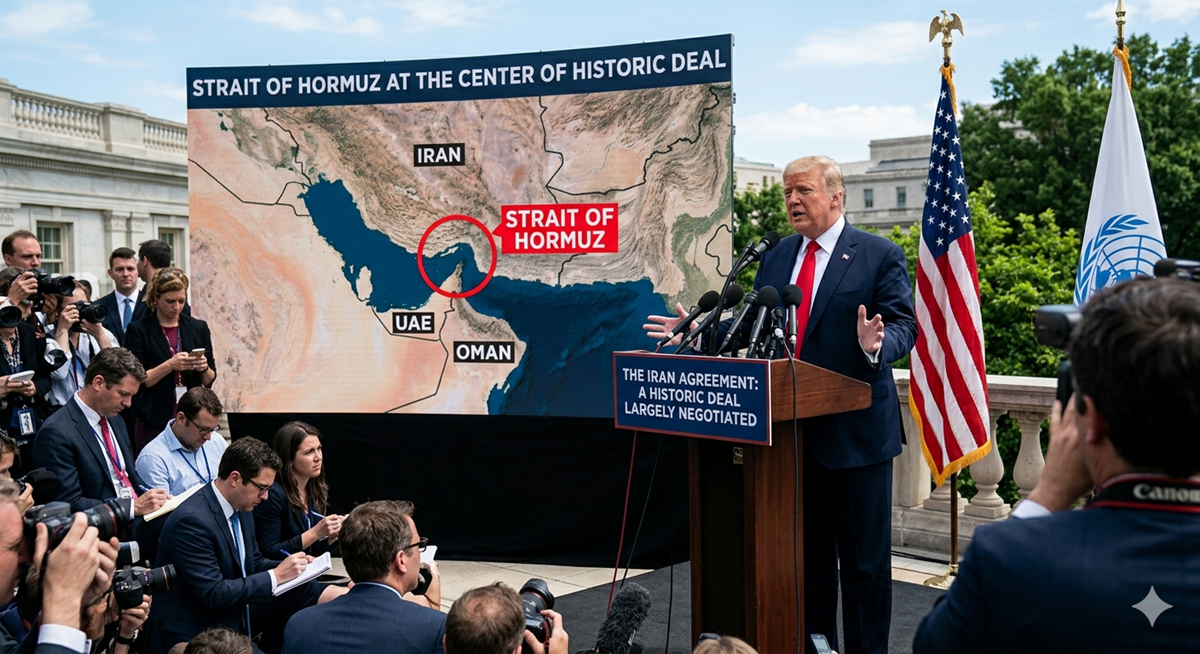
On Saturday, May 23, Trump posted on Truth Social that an agreement had been reached “subject to finalization between the United States of America, the Islamic Republic of Iran, and the various other Countries.” He stated that “final aspects and details of the Deal are currently being discussed, and will be announced shortly.” Ahead of the announcement, Trump held a wide-ranging call from the Oval Office with leaders of Saudi Arabia, the UAE, Qatar, Pakistan, Turkey, Egypt, Jordan, and Bahrain. He also spoke separately with Israeli Prime Minister Benjamin Netanyahu, describing the conversation as going “very well.” The breadth of the consultations reflects the multinational nature of the peace effort and the region-wide stakes involved.
What the Deal Reportedly Includes
According to multiple sources with knowledge of the negotiations, the proposed agreement has several key components. First, it involves a Memorandum of Understanding as an initial phase, to be followed by broader talks within 30 to 60 days. Second, the deal would formally declare an end to the war, with a separate two-month negotiation period dedicated to Iran’s nuclear program. Third, and critically, the agreement would include the reopening of the Strait of Hormuz — described by one US official as making sure it is “de-mined and back open for business.” That official also outlined a structured incentive system: “As the Strait opens, the blockade loosens proportionately,” with no benefits flowing to Iran if it fails to perform. The deal reportedly also includes the release of some Iranian assets held in foreign banks.
Iran’s Response and Remaining Disputes
Iran’s response has been cautious and at times contradictory. The Iranian Foreign Ministry described the draft as a “framework agreement,” while Iran’s semi-official Fars news agency indicated that significant disagreements remain. Iran’s chief negotiator, Mohammad Bagher Ghalibaf, took a defiant posture, warning that Iran “will not back down from the rights of our nation.” Meanwhile, Iranian state media disputed Trump’s characterization of the Strait of Hormuz reopening, asserting the waterway would remain under Iranian control. Iran also sought to include the nuclear issue in the primary talks, rather than deferring it to a later phase. These conflicting signals underscore how difficult the final stretch of negotiations could be, even as both sides appear broadly interested in a resolution.
🔑 Key Points
- President Trump announced on May 23, 2026, that a US–Iran peace agreement has been “largely negotiated,” with final details to follow shortly.
- The proposed deal centers on reopening the Strait of Hormuz, a vital global energy corridor blocked since the February 2026 conflict began.
- Trump held Oval Office calls with leaders of eight nations — including Saudi Arabia, Pakistan, Qatar, and Turkey — alongside a separate call with Israel’s Netanyahu.
- Iran’s response has been mixed: its Foreign Ministry acknowledged a “framework agreement,” but state media and senior negotiators pushed back on key terms.
- A fragile ceasefire has been in place since April 8, but both sides are still jockeying over the Strait, nuclear talks, and the formal end-of-war declaration.
Impact & Analysis
If finalized, the Iran deal would have sweeping short- and long-term consequences. In the near term, reopening the Strait of Hormuz would ease pressure on global oil markets, where prices have surged due to the ongoing blockade. Countries dependent on Middle Eastern energy exports — particularly in Europe and Asia — would see immediate relief. The release of frozen Iranian assets could also provide a boost to Iran’s battered economy. Over the longer term, the deal sets the stage for nuclear negotiations, which remain the most contentious unresolved issue. Iran’s insistence on discussing its nuclear program and highly enriched uranium upfront — rather than in a second phase as the US prefers — could yet derail progress. Domestically, Trump faces skepticism from some Republican senators who worry that a deal could signal American weakness. Meanwhile, Iran’s population, which did not rise up against its government as Trump and Netanyahu once predicted, gives Tehran’s leadership a degree of internal resilience. The success of the deal will ultimately depend on whether both sides can translate a largely negotiated framework into binding commitments.
People Are Also Asking
Conclusion
The announcement that the Trump–Iran agreement has been largely negotiated represents a potential turning point in one of the most destabilizing conflicts of 2026. With the Strait of Hormuz at the center of negotiations and global energy markets hanging in the balance, the stakes could hardly be higher. Yet significant hurdles remain — Iran’s contested response, unresolved nuclear questions, and the delicate final stage of diplomacy all stand between the current framework and a signed deal. As negotiators continue their work and the world watches closely, the coming days will be decisive. Stay informed by sharing this article and following the latest updates on this fast-moving story.
⚠️ Disclaimer: This article is for informational purposes only. All facts are drawn from publicly available reporting as of May 25, 2026.
📰 Sources: CNN, PBS NewsHour, Al Jazeera, NPR, CNBC, Time Magazine — reporting on the US–Iran peace negotiations, May 23–25, 2026.
Related Internal Links
- Artivorin Reviews 2026: Does This Joint Supplement
- US Military Strikes on Iran: What Happens Next? (2026)
- AlphaFuel Pro Reviews 2026: Performance & Value
- AlphaFuel Pro Reviews 2026: Performance & Value